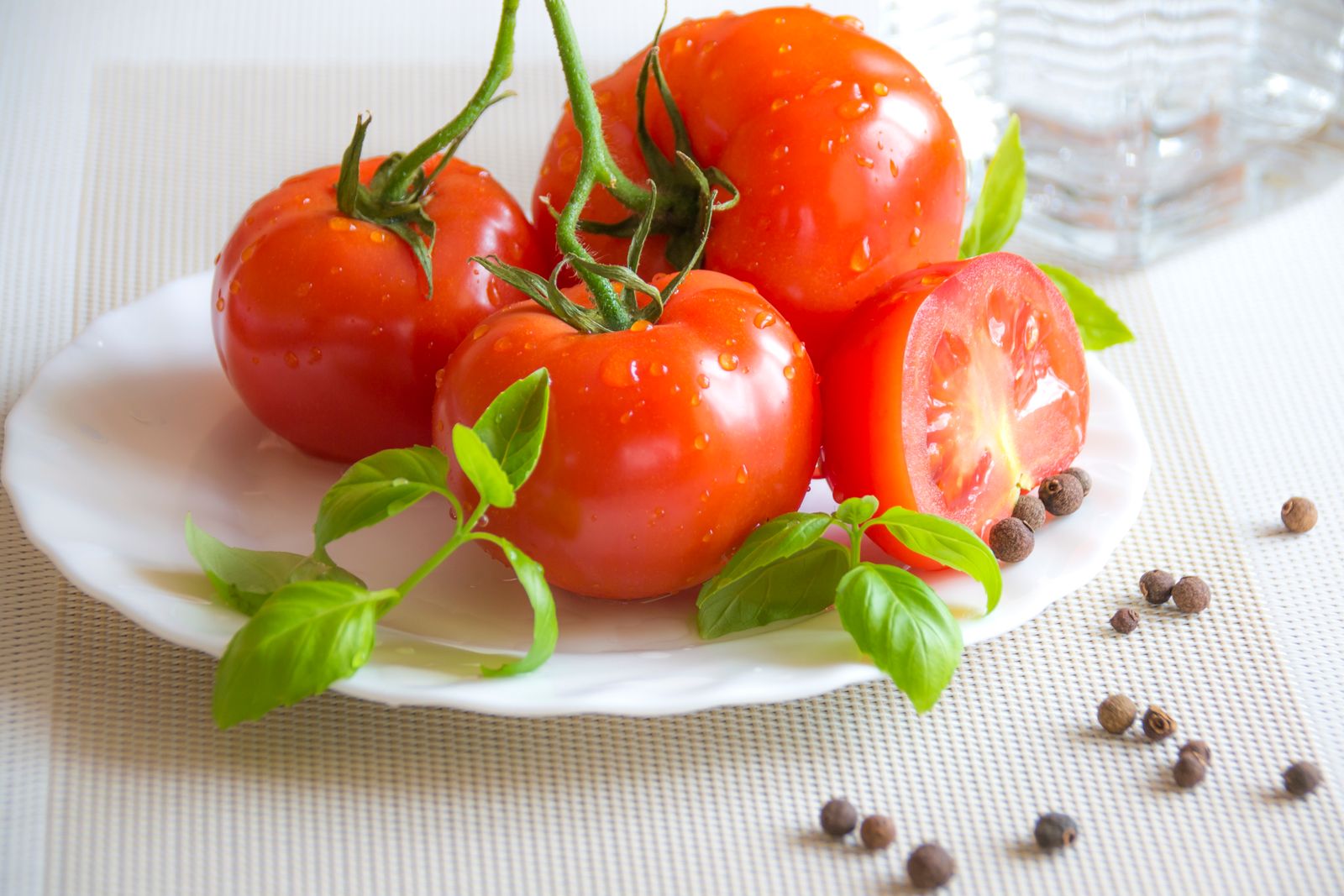
I planted six tomato plants on a Brooklyn balcony in May. By August, four had survived. By harvest, the four produced exactly eleven tomatoes — eleven small, sour, mostly misshapen tomatoes that I ate anyway, on toast, with salt. This is not a failure story. This is, by the math, what most first-year tomato growers actually get, and it is, in the end, the only lesson the balcony was trying to teach.
I am a 38-year-old woman in Brooklyn. I work from home as a writer. I have a partner, a small terrier named Olive, and a balcony that faces west, in a brownstone in Crown Heights, that gets about four hours of direct sun a day in a good summer and three the rest of the time. My mother grew up in Pittsburgh but spent every summer of her childhood with her grandmother in a small town outside Lyon. She grew tomatoes on a porch there until she was twelve. I am, in 2026, growing tomatoes on a balcony in Brooklyn. The line between those two sentences is the whole story.
Below is the list, in order of how the season actually went. I have changed my mind about several things I used to believe about growing food. I have opinions on what to skip. There is a brief history of how the tomato went from a wild berry in the Andes to a $4 seedling at a Brooklyn nursery. And there is, at the end, an honest summary — because anyone who tells you balcony tomatoes are easy has not, in fact, lost two plants to early blight by mid-July.
The varieties I tried, and what each one gave me
1. Sungold, $4 seedling (2 plants). Total harvest: 5 tomatoes. The orange cherry that tastes, eaten warm off the vine in late August, like something out of a fairy tale. These two plants did almost all the work. The fruits are small, the plants are aggressive, and they will, by the second week of August, be setting fruit faster than you can pick. I had, in week three, a small bowl of Sungolds on the counter that I ate like candy. The plant is, by every measurement, the only reason a first-year balcony grower should keep going.
2. Cherokee Purple, $4 seedling (1 plant). Total harvest: 2 tomatoes. The dark beefsteak that does, against expectation, set fruit in partial sun. The plant is leggier than the Sungold. The fruit is larger. The fruit is also, in a Brooklyn summer, slower to ripen — both of my Cherokee Purples came off the vine in the second week of September, when the light was already changing. Worth it. Not productive. Worth it.
3. Black Krim, $4 seedling (1 plant). Total harvest: 4 tomatoes, with blossom-end rot on two more I had to throw away. The Black Krim is the tomato that almost broke me. The plant grew well. The fruit set well. Half of the fruit developed, in late July, a brown leathery spot on the bottom that turned out to be blossom-end rot — a calcium-uptake problem caused, in containers, by inconsistent watering. I learned, by the third bad tomato, to water on a schedule rather than when I remembered. The Black Krim is the tomato that taught me that lesson.
4. Brandywine, $4 seedling (2 plants). Total harvest: 0. Both plants flowered in late June and never set fruit. The Brandywine is a full-sun heirloom that wants eight hours of direct light, a deep root system, and a long, hot summer. My balcony gave it four hours of direct light, a 10-gallon grow bag, and a long, mild summer. The plants grew to four feet. They looked magnificent. They produced nothing. The Brandywine was, in the end, the most expensive lesson in the garden: not every heirloom is going to work where you are.
That is the math: $24 in seedlings, eleven tomatoes, one season, and a notebook full of mistakes I will not make again.
The gear, and what it actually cost
Here is what the season cost me, beyond the seedlings.
Three 10-gallon fabric grow bags, $18 each. The fabric grow bag is, by every measurement, the best container for a balcony tomato. It air-prunes the roots, which keeps the plant from getting root-bound. It folds flat in October. It is, by 2026 standards, the only container worth buying. The cheap plastic planter from the hardware store is, in my experience, the container that waterlogs in July and kills the plant by August.
One bag of organic potting mix, $22. Not "garden soil" and not "tomato soil." The bag is labeled organic potting mix. I learned, by mid-June, that the cheap bagged "garden soil" I almost bought compacts in a fabric grow bag and suffocates the roots. The potting mix stays loose. The tomatoes noticed.
Espoma Tomato-tone fertilizer, $18 for an 8 lb bag. Applied every two weeks from first flower through harvest, per the bag instructions. Skip the fertilizer and the plant produces leaves and flowers and, by August, almost no fruit. Apply the fertilizer and the plant produces fruit and, by mid-July, needs a Florida Weave of jute twine to keep it from collapsing.
Six marigolds in 4-inch pots, $3 each. Planted around the perimeter of the grow bags. The marigolds are not, strictly speaking, necessary. They do, however, deter some of the smaller pests, and they make the balcony look, in July, like a place where someone is paying attention.
Bamboo stakes, six for $3. Tied to the railing with jute twine, in a Florida Weave. The stakes keep the plants from falling over when they get top-heavy. They are, by my partner's description, "the cheapest infrastructure in the garden."
Watering can, $14. A 2-gallon plastic can with a long spout. The long spout is the point. The long spout gets water to the base of the plant without splashing the leaves, which is, by every diagnostic account, how early blight gets started.
Total gear spend: $139. Total harvest value, at Greenmarket prices: $13. Net cost of the eleven tomatoes I actually grew: $126. The math is, by any honest accounting, embarrassing. The math is also, in the end, the only thing that matters.
What I have changed my mind about
A few beliefs I held in April, when I drove to GrowNYC on a Saturday morning and bought six seedlings, that the last five months have killed.
I used to think tomatoes needed full sun. Every gardening book says six to eight hours of direct sun per day. My balcony gets four. The four Sungolds I grew produced, in four hours of sun, more fruit than the two Brandywines produced in the same four hours. The lesson is that the cherry varieties are built for partial sun. The heirloom slicers are not. Plant cherries on a balcony. Skip the slicers.
I used to think heirlooms were better. Heirlooms are, by every romantic standard, better. They taste like specific places. They have histories. They are, in the supermarket, more expensive. On a Brooklyn balcony, in 2026, the heirloom I planted produced zero fruit. The hybrid cherry I planted produced five. The lesson is that heirlooms are better in a place that gets full sun and a long season. The lesson on a balcony is that a hybrid cherry will outperform a Cherokee Purple when the sun does not cooperate.
I used to think I needed a big garden. I grew, in a 10-gallon grow bag, a tomato plant that reached four feet. The roots of a tomato plant, in a container, will fill whatever space they are given. The plant does not know it is in a bag. The plant knows, with brutal precision, how much soil it has. A balcony is, in the end, just a small garden that happens to be elevated.
I used to think I had to start from seed. I started, this year, from seedlings. The seed-starting setup — the heat mat, the grow light, the seed-starting mix, the six weeks of waiting — would have added $80 to the cost and a month of attention to the calendar. The $4 seedling from a real nursery is, in 2026, the right starting point for a first-year grower. Start from seed in year two, when you know which varieties you want.
I used to think squirrels were the main problem. The squirrels on my balcony ignored the tomatoes entirely. The actual problems were early blight (fungal, killed two plants), blossom-end rot (calcium-uptake, cost me two Black Krims), and inconsistent watering (cost me one plant and probably cost the Brandywines their entire crop). The squirrel is a problem for a strawberry grower. The tomato grower has, in 2026, more interesting enemies.
What to skip when starting a balcony tomato garden
If I were advising a friend who wanted to grow tomatoes on a Brooklyn balcony for the first time in 2026, I would tell them to skip these things entirely.
Tomato cages. The tomato cage is, by every measurement, the wrong structure for a tomato plant. The cage is too short. The cage is too narrow. The cage collapses, by August, under the weight of a Sungold in full production. The Florida Weave — jute twine tied between stakes in a figure-eight around the stem — is, by my current standard, the only staking method worth using.
"Tomato soil." The bag labeled tomato soil at the hardware store is, in most cases, regular potting mix at twice the price. Buy the organic potting mix. Skip the "tomato" label. The label is a marketing tax.
Pruning shears. The tomato plant does not need pruning shears. The tomato plant needs, in mid-July, the lower leaves pinched off by hand, at the stem, between two fingers. A $40 pair of pruning shears is, for this job, the wrong tool. Your fingers are the right tool.
Calcium supplements. The blossom-end rot on my Black Krims was, I assumed, a calcium deficiency. I bought, in panic, a $14 bottle of calcium spray. I applied it for two weeks. The rot kept coming. The rot was, in the end, an inconsistent-watering problem, not a calcium problem. The calcium supplement was, in the end, a $14 lesson in reading the actual diagnosis before buying the cure.
"Double your yield" products. The garden center is full of $25 bottles that promise to double, triple, or quadruple your yield. None of them, by every measurement that matters, do anything a regular feeding schedule does not already do. The Espoma Tomato-tone at $18 will outperform, on a balcony, every "yield booster" on the shelf.
Sprays of any kind. Copper fungicide, neem oil, insecticidal soap. I bought, in July, an $18 bottle of copper fungicide to fight the early blight. I applied it twice. The blight kept coming. The cure for early blight, on a balcony, is to remove the affected leaves the moment they appear, water at the base of the plant, never on the leaves, and accept that some years the blight gets you. The spray is, in the end, $18 of false confidence.
A brief history
The tomato is, in the most literal sense, a New World plant. The wild ancestor — Solanum pimpinellifolium — still grows as a small tart berry, the size of a blueberry, in the Andes of Peru and Ecuador. Indigenous farmers in Mesoamerica domesticated it, by archaeological estimate, around 500 BCE. The Aztecs called it tomatl. The Spanish encountered it in the early sixteenth century and carried it back to Europe, where, for about two hundred years, most Europeans refused to eat it. The plant was a nightshade. The leaves were visibly poisonous. The fruit, Europeans assumed, must be too.
Tomato cultivation in Italy did not become routine until the late 1700s, when farmers around Naples began growing it in significant volume. The first cookbook dedicated to the tomato — Il Cuoco Galante by Vincenzo Corrado — was published in Naples in 1692. The Heinz company began bottling ketchup in 1876. Campbell's introduced condensed tomato soup in 1897. By the early twentieth century, the tomato was, in the American kitchen, no longer exotic.
The heirloom revival — the movement that brought Cherokee Purple, Brandywine, Black Krim, and a thousand other named varieties back into circulation — began, in its modern form, in the 1980s, with the work of Kent Whealy and the Seed Savers Exchange. The Cherokee Purple itself was named in 1990 by Craig LeHoullier, a North Carolina chemist who received the original seeds from a Tennessee gardener whose family had been growing them for a century. Every Cherokee Purple you buy today is, in a genetic sense, descended from that Tennessee garden.
The 2020s tomato grower is, in this lineage, a small late chapter. The balcony in Brooklyn is not, in the strict sense, where the tomato belongs. The balcony in Brooklyn is, however, where I am. The tomato does not seem to mind.
The honest summary
A balcony tomato garden is, in the end, eleven tomatoes. The eleven tomatoes are, in the honest math, $126 worth of education. The education is, in the end, the only part of the season I will still have in November.
What worked for me: a west-facing balcony, four hours of direct sun, two Sungold plants, one Cherokee Purple, consistent watering, fertilizer every two weeks from first flower, a Florida Weave of jute twine, and the willingness to lose two plants to early blight without panic.
What did not work for me, and may not work for you: heirloom slicers on a partial-sun balcony, watering when I remembered rather than on a schedule, the $18 bottle of copper fungicide that did not fix the blight, and the two Brandywines that grew to four feet and never set a single fruit.
Next year, I will plant four Sungolds and two Cherokee Purples. I will skip the Brandywine. I will water on a schedule. I will, by August, have twenty-five tomatoes instead of eleven. The math will still not work out, by any honest accounting. The math is not, in the end, the point. The point is the Sungold, eaten warm off the vine, on a Tuesday in August, on a balcony in Crown Heights, with Olive waiting, with the specific patience of a small terrier, for me to drop a piece of the fruit she is not supposed to have.
She will, in the end, get the piece. The tomato is, by that point, already eaten.