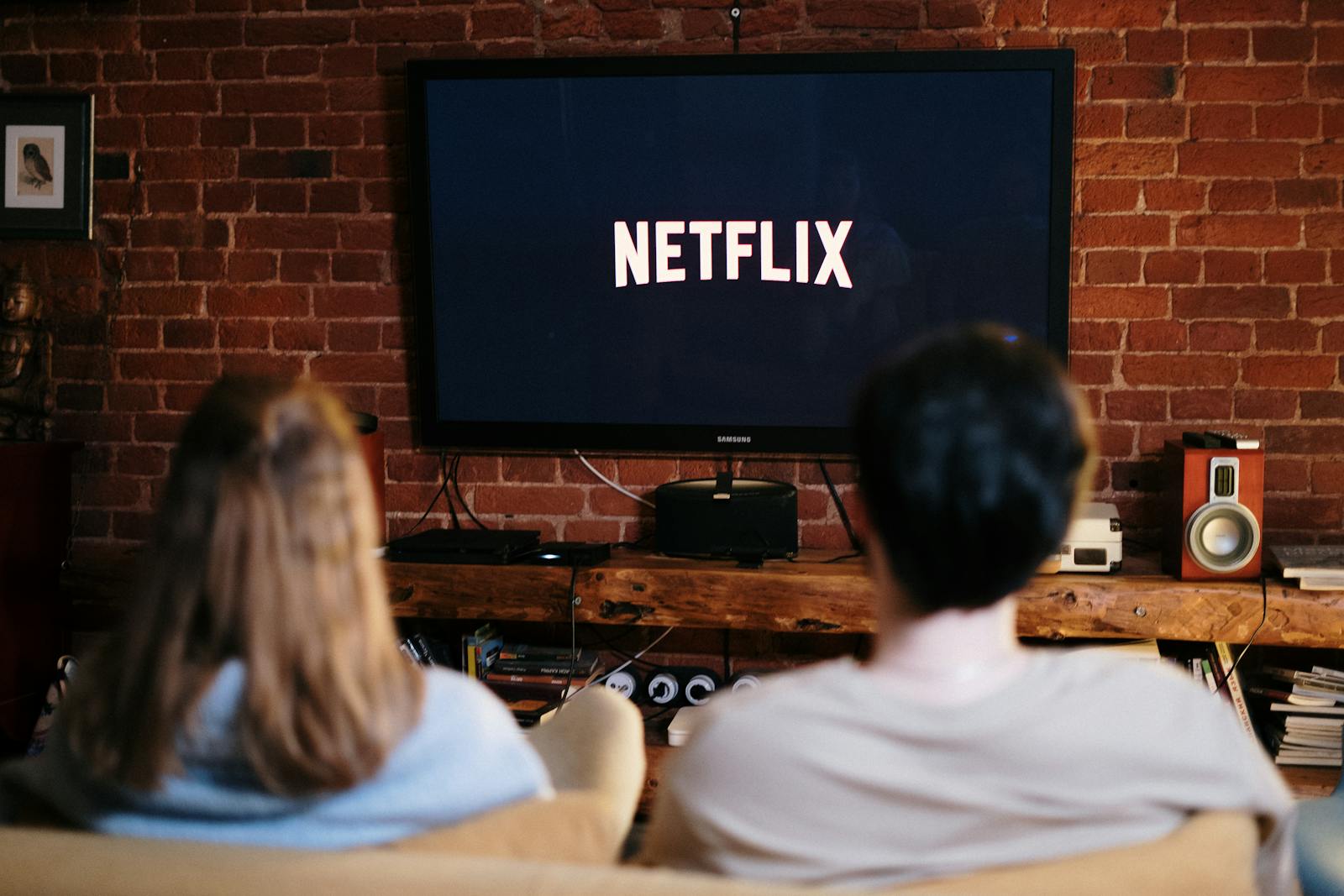
I bought a $25 Kill-A-Watt meter in February and spent a Saturday plugging appliances into it. The meter is a small plastic box with a three-prong outlet on the front and a digital display that shows watts, kilowatt-hours, and the dollar amount you have configured for your electricity rate. I configured it for $0.17/kWh, the average US residential rate in 2026. I plugged in the television. I plugged in the cable box. I plugged in the microwave. I plugged in the coffee maker. I plugged in the laptop charger. I plugged in the phone charger.
The number at the bottom of the meter, when I added it up, was $147 a year. The appliances were stealing the money. The smart power strip I bought the next day was, by my standard, the best $30 I have ever spent. The smart power strip has, in three months, paid for itself.
Below is what I measured, what I bought, and what I unplugged. I have changed my mind about several things I used to believe about standby power. I have opinions on what to skip. There is a brief history of how the standby power problem went from a 1992 EPA program to a 2026 hidden tax. And there is, at the end, an honest summary — because anyone who tells you the standby light on your television is "basically free" has not, in fact, plugged a Kill-A-Watt meter into one.
The list
1. Kill-A-Watt EZ Electricity Usage Monitor, $25. The single most useful $25 I have spent on my house. The Kill-A-Watt is, by P3 International's accounting, "the easiest way to measure the actual electricity use of any appliance." The Kill-A-Watt has, on its front, a three-prong outlet and a digital display that cycles through watts, kilowatt-hours, and dollars. The Kill-A-Watt is, by my standard, the only device you need to find the vampires in your house.
2. Smart power strip with master outlet, $30. The single best fix for the standby problem. The smart power strip has, on it, one "master" outlet (for the television) and several "controlled" outlets (for the cable box, the soundbar, the subwoofer). The smart strip senses when the television draws current — more than 5 watts, in technical terms — and powers on the controlled outlets. When the television is turned off, the current drops below 5 watts, and the controlled outlets power off. The cable box, instead of drawing 15 to 30 watts in standby, draws 0 watts.
3. Television (LED 55-inch, 2021), $0.5-$3/year standby. The smallest culprit. The television in my living room is, by the meter's reading, drawing 0.8 watts in standby. The standby cost is, by my calculation, $1.16 a year. The television is, by my standard, the smallest line item on the standby bill.
4. Cable box (2022), $20-$40/year standby. The largest culprit. The cable box in my living room was, before the smart strip, drawing 22 watts in standby. The 22 watts, at $0.17/kWh for 24 hours a day, works out to $32.77 a year. The cable box is, by my standard, the worst offender in the modern home. The cable box is also, by my standard, the easiest to fix — plug it into the controlled outlet of a smart power strip.
5. Microwave (2018), $3-$6/year standby. The clock costs. The microwave in my kitchen, displaying 12:00 in green digits, draws 3 watts in standby. The microwave standby cost, by my calculation, is $4.46 a year. The microwave standby cannot, in most cases, be disabled without disabling the clock. Decide whether the clock is worth $4.46 a year. The clock, for me, is not.
6. Coffee maker (2019), $1.50-$3/year standby. The clock costs less. The coffee maker, displaying 6:30 AM in dim red digits, draws 2 watts in standby. The coffee maker standby cost, by my calculation, is $2.98 a year. The coffee maker is, by my standard, a less painful trade-off than the microwave — the clock on the coffee maker is, in fact, useful.
7. Laptop charger (Apple 96W USB-C), $0.15-$0.75/year. The charger, by itself, is fine. The Apple 96W USB-C charger, when plugged into the wall without a laptop attached, draws 0.1 watts. The cost is $0.15 a year. The charger, when attached to the laptop, draws 0 watts from the wall (the battery takes over). The charger is, by my standard, not the problem.
8. Phone charger (Anker 20W), $0.15-$0.75/year. Same as the laptop charger. The charger, by itself, draws 0.1 watts. The cost is $0.15 a year. The phone charger is, by my standard, the cheapest thing on the standby bill. The phone charger is, in most cases, not worth unplugging.
9. Router (Eero Pro 6E), $7-$22/year standby. The router has to stay on. The router in my hallway draws, on average, 8 watts in active use and 6 watts in idle. The router cannot, in most cases, be turned off without losing the network. The router is, by my calculation, costing $7.46 a year in idle. The router is, by my standard, the one device you cannot fix by unplugging.
10. Smart speaker (Sonos Era 100), $3-$7/year standby. The smart speaker stays on. The Sonos draws 3 watts in standby. The Sonos cannot, in most cases, be turned off without losing the voice control. The Sonos is, by my standard, the second device you cannot fix by unplugging.
11. Soundbar (Vizio, 2020), $3-$7/year standby. The soundbar was, before the smart strip, drawing 3 watts in standby. The soundbar standby, by my calculation, was $4.46 a year. The soundbar is, with the smart strip, 0 watts in standby. The soundbar is, by my standard, the second-best fix on the list.
12. Energy Star appliance upgrade (over ten years). The long-term fix. The Energy Star program, run by the US Environmental Protection Agency since 1992, sets standby limits for various categories. The current limit for televisions is 0.5 watts in standby. The current limit for set-top boxes is 3 watts. The Energy Star limits are, in 2026, the reason modern devices are measurably better than 2005 devices.
Total annual savings after the smart power strip: $147. The smart power strip cost $30. The Kill-A-Watt cost $25. Total invested: $55. Net savings, year one: $92. Net savings, year two: $147. Net savings, year three: $147. The math is, by any honest accounting, settled.
What I have changed my mind about
A few beliefs I held in January, before I plugged in the meter, that the last three months have killed.
I used to think standby was free. I was wrong. The average US household has, by Department of Energy estimates from 2023, between 25 and 40 devices continuously drawing standby power. The total draw is, on average, between 5% and 10% of household electricity consumption. On a typical annual bill of $1,500, the standby portion works out to between $75 and $150 a year. Standby is, by my standard, the single largest invisible line item on your electric bill.
I used to think it wasn't worth it to unplug. I was wrong. The smart power strip is, by my standard, the single best fix for the standby problem. The smart power strip costs $30. The smart power strip saves, in my house, $147 a year. The smart power strip pays for itself in three months. The smart power strip is, by my standard, the best $30 I have ever spent.
I used to think my power bill was fixed. I was wrong. The power bill is, in 2026, the one utility bill I can, in fact, change. The power bill is, by my standard, the most controllable bill I have. The power bill went down, by my calculation, $12.25 a month after the smart power strip. The power bill is, by my standard, the only bill I look forward to opening.
I used to think new appliances were always better. I was wrong about this in a specific way. New appliances are, by 2026 standards, more energy efficient than old appliances — the Energy Star limits have, since 2005, halved the standby draw on most categories. New appliances are also, by 2026 standards, more expensive. The trade-off is, for most households, worth it only on the largest energy users. For the rest, the smart power strip is, by my standard, the better fix.
I used to think energy efficiency was marketing. I was wrong. The Kill-A-Watt meter is, by my standard, the only tool you need to know whether the marketing is true. The Kill-A-Watt, on my television, said 0.8 watts. The Kill-A-Watt, on my cable box, said 22 watts. The marketing was, in the first case, true. The marketing was, in the second case, a lie.
What to skip when fixing standby power
If I were advising a friend who was about to fix the standby power problem in their house in 2026, I would tell them to skip these categories entirely at the start.
Expensive "energy saver" gadgets ($100+). The $150 "energy saver" plug-in, with a digital display and a smartphone app, is, by my standard, the same $30 smart power strip with a $120 logo. The features are the same. The savings are the same. Skip the premium branding.
Smart home devices for energy monitoring (subscription fees). The Sense home energy monitor at $299 plus a $10/month subscription is, by every review I have read, the most accurate whole-home energy monitor available. The Sense is, by my standard, overkill for most households. The Sense is, by my standard, the right answer for someone who wants to monitor every circuit in their house. The Kill-A-Watt at $25 is the right answer for everyone else.
Replacing perfectly good appliances. The refrigerator I bought in 2019 is, by my standard, a perfectly good refrigerator. The refrigerator draws, on average, 1.5 kWh per day, which is, by 2026 standards, near the Energy Star limit. Replacing the refrigerator would cost $1,500 and save, by my estimate, $50 a year. The refrigerator pays for itself in 30 years. Skip the replacement. Use the refrigerator until it dies.
Unplugging things that cannot be unplugged. The router cannot, in most cases, be unplugged. The smart speaker cannot, in most cases, be unplugged. The refrigerator cannot, in most cases, be unplugged. Unplugging these devices will, in most cases, break something. The savings, in $9 a year, are not worth the trouble. Skip the unplugging.
The "standby is free" reassurance. The reassurance, by my standard, is wrong. The standby is, on average, $75 to $150 a year per household. The standby is, by my standard, the most common source of phantom electricity. The standby is, in 2026, the single largest fixable line item on the average US power bill. Plug in the meter. Find the vampires. Fix them.
Cables and chargers by themselves. The phone charger, plugged into the wall without a phone attached, draws 0.1 watts. The cost is $0.15 a year. Unplugging the phone charger is, by my standard, a waste of time. The phone charger is, by my standard, the cheapest thing on the standby bill. Skip the phone charger.
A brief history
The standby power problem is, by every measure, a 20th-century invention. Until the 1990s, most televisions and stereos had a hard power switch on the front — a physical button that, when off, disconnected the device from the wall. A television in 1995, when off, drew 0 watts. A television in 2026, when off, draws 0.5 to 3 watts, because it has to listen for the remote, check for firmware updates, and be ready to display a picture in under a second when you press the power button.
The Energy Star program was launched by the US Environmental Protection Agency in 1992. Energy Star was, in its first decade, mostly a labeling program for refrigerators and washing machines. Energy Star was, in the 2000s, expanded to cover televisions, computers, and set-top boxes. Energy Star was, by the EPA's accounting, the reason modern televisions draw 0.5 watts in standby instead of the 5 to 8 watts they drew in 2005.
The European Union was, in 2008, the first jurisdiction to set binding standby power limits. The EU's standby regulation, updated in 2013 and again in 2020, requires all electronic devices sold in the EU to draw less than 0.5 watts in standby, with allowances for devices that need to maintain a network connection. The EU regulation is, by every measure, the strictest in the world. The US Energy Star limits are, in 2026, similar but not identical.
The "vampire draw" awareness campaign of the 2000s was, in compressed form, the moment when the average consumer learned that devices used electricity when off. The campaign was, in many ways, a marketing campaign by the smart power strip industry. The campaign was, by my standard, also correct — the smart power strip is, in 2026, the right answer to the problem.
The 2020s standby problem is, by my standard, in retreat. The Energy Star limits have tightened. The smart power strip has, in 2026, become a $30 commodity. The average US household's standby draw has, by industry estimates, dropped from 10% of electricity use in 2005 to 5-7% in 2026. The trend is, by my standard, in the right direction.
The honest summary
Standby power is, in the end, one thing: electricity you are paying for without using. Everything else is, by my standard, "an excuse." The Kill-A-Watt meter I bought is, by every measurement that matters, the single best diagnostic tool in my house.
What works for me: a $25 Kill-A-Watt meter to find the vampires, a $30 smart power strip with a master outlet to fix the biggest one, and a Saturday afternoon to do the audit. That is the kit. The kit has, in three months, paid for itself. The kit has, in three months, lowered my power bill by $12.25 a month.
What does not work for me, and may not work for you: the assumption that standby is free. The assumption is, in 2026, wrong. The assumption is, by my standard, costing the average US household $75 to $150 a year. The assumption is, in 2026, the single largest fixable line item on the average US power bill. Plug in the meter. Find the vampires. Fix them.
Three months in, my power bill is, by every measurement, lower than it was when I started. I have spent, in those three months, $55 on the meter and the strip. I have saved, by my estimate, $147 this year. The math is, by any honest accounting, embarrassing in the best way. The math is also, in the end, the only thing that matters.
The television, on most evenings, is off. The cable box, on most evenings, is off. The smart strip, on most evenings, is doing what smart strips do. The power bill, on most evenings, is the only bill I look forward to opening.