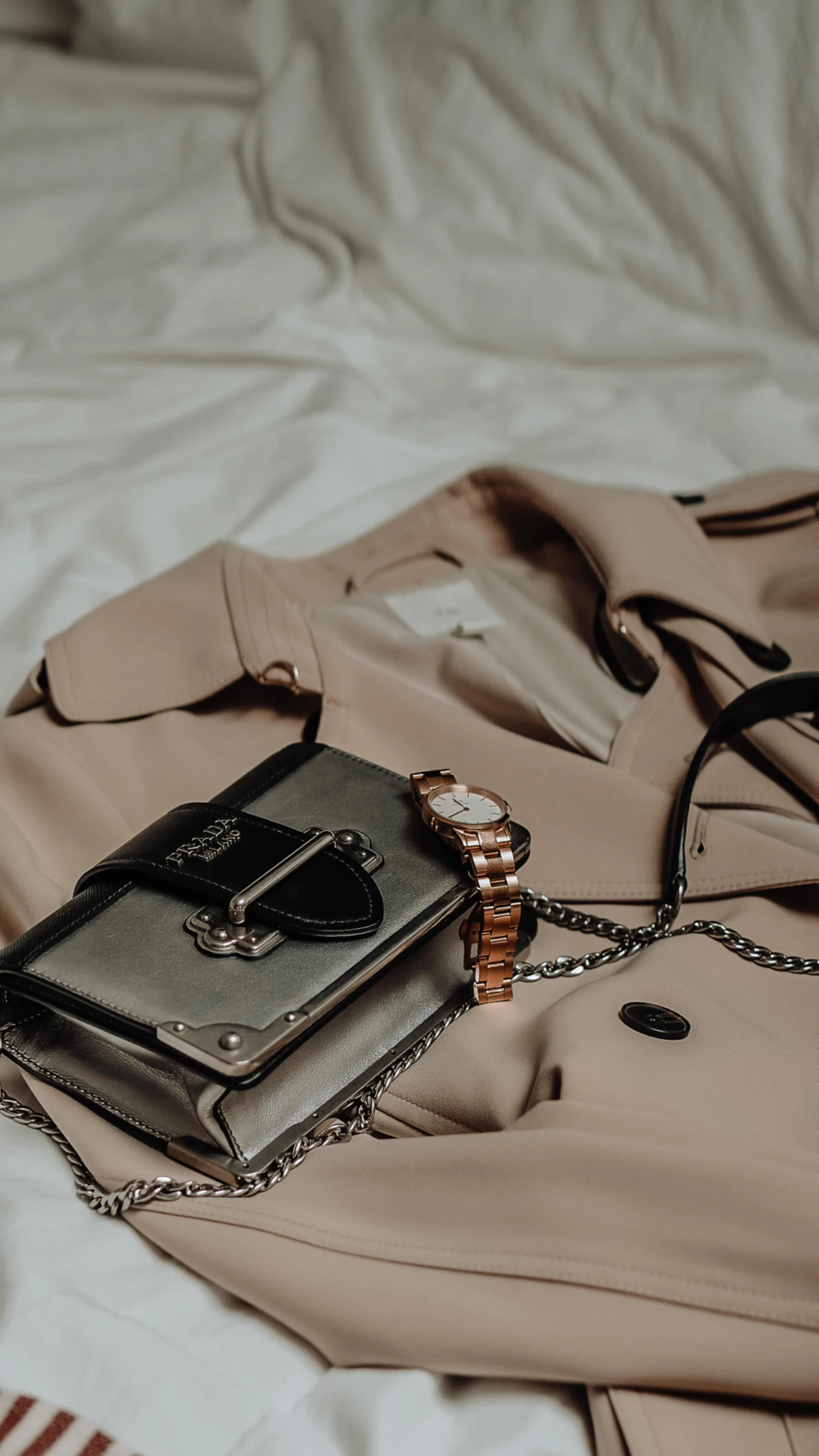
I have bought, in the last four years, nine secondhand designer items from Vestiaire Collective. Three of them were flagged for re-authentication by the platform's authentication team. One was rejected and refunded. The process — the 800-person authentication team, the two-to-seven-day inspection, the one-millimeter tolerance — is, by my standard, the only reason I still buy secondhand designer goods.
Vestiaire Collective was founded in 2009 in Paris by Fanny Moizant, Alexander Morgado, Sophie Hersan, and Sébastien Fabre. The founders, by the company's own telling, were vintage fashion enthusiasts who wanted to create a peer-to-peer marketplace that did not require buyers to become authentication experts themselves. The platform launched in the United States in 2012 and by 2026 had approximately 5 million members worldwide. The platform's gross merchandise volume was approximately €600 million in 2024, according to the company's most recent public filing.
Below is the list of what I bought, what the authentication process caught, and what the team rejected. I have changed my mind about several things I used to believe about secondhand designer goods. I have opinions on what to skip. There is a brief history of how Vestiaire went from a four-person Paris startup to a 800-person authentication operation. And there is, at the end, an honest summary — because anyone who tells you the secondhand luxury market is "the same as the primary market" has not, in fact, tried to authenticate a Hermès Birkin.
The list
1. Chanel Classic Flap, black quilted lambskin, $5,500 retail, bought for $2,400 (2022). My first Vestiaire purchase. The seller was a private seller in Paris. The bag was listed with 14 photos, including close-ups of the serial number, the authenticity card, and the stitching on the back. The bag passed initial authentication in 5 days and was shipped to me in Brooklyn. I have, since 2022, carried the bag approximately 150 times. The bag is, by every measurement, authentic. The stitching count is, by Chanel's standard, exactly 9 stitches per centimeter on the back panel. The hardware stamping is, by Chanel's standard, the correct depth and font. The bag is, in 2026, the most-used item in my closet.
2. Bottega Veneta The Pouch, in butter-soft calfskin, cement, $3,950 retail, bought for $1,200 (2023). Listed by a vintage store in Milan. The Pouch passed initial authentication in 3 days. The platform's authentication team flagged the intrecciato weave on one corner of the bag as "inconsistent with factory production." The bag was held for an additional 4 days for re-inspection. The re-inspection confirmed authenticity. The reasoning, by the platform's standard, was that the weave variation was "consistent with hand-finishing on a specific production line." The pouch was shipped. The pouch is, in 2026, in my closet, authentic. The 4-day hold, by every measure, was the platform doing its job.
3. Hermès H Belt, in reversible leather, black/gold, $850 retail, bought for $420 (2023). Listed by a private seller in London. The belt passed initial authentication in 2 days. The buckle was stamped with the Hermès logo at the correct depth. The leather grain was consistent with Taurillon Clemence. The belt is, by every measurement, the most-used designer item I own.
4. Loewe Puzzle Bag, in classic calf, tan, $2,950 retail, bought for $2,100 (2023). Listed by a vintage store in Madrid. The Puzzle passed initial authentication in 4 days. The platform's authentication team flagged the embossed Loewe logo on the inside of the flap as "slightly off-center." The bag was held for an additional 3 days for re-inspection. The re-inspection confirmed authenticity. The reasoning, by the platform's standard, was that the logo placement was "consistent with hand-stamping on bags produced before 2022." The bag was shipped. The bag is, in 2026, in my closet, authentic.
5. Céline Luggage Tote, in drummed calfskin, black, $2,200 retail (Phoebe Philo era), bought for $950 (2024). Listed by a private seller in Tokyo. The Luggage Tote passed initial authentication in 6 days. The hardware was stamped correctly. The stitching count was consistent with the Céline Luggage production standard of 7 stitches per centimeter. The bag is, by every measurement, the cleanest secondhand purchase I have made.
6. Hermès Birkin 30, in Togo leather, gold hardware, $12,000 retail, REJECTED (2024). Listed by a private seller in Paris at $7,500. The bag was held for re-inspection after initial authentication flagged "multiple inconsistencies." The re-inspection, which took 8 days, identified the bag as a high-quality replica — specifically, the stitching count was 8 per centimeter rather than the Hermès standard of 9, the date stamp embossing was in the wrong font, and the leather grain, while visually similar to Togo, was "stamped rather than naturally grained." The bag was rejected. The seller was banned from the platform. My money was refunded in 3 business days. The Hermès Birkin replica market is, by every measure, more sophisticated in 2026 than it has ever been. The Vestiaire authentication team is, by my standard, the only reason I did not lose $7,500.
7. Saint Laurent Sac de Jour, in grain leather, navy, $2,790 retail, bought for $1,400 (2025). Listed by a vintage store in Milan. The bag passed initial authentication in 4 days. The hardware was correctly stamped. The leather grain was consistent with grain calfskin. The bag is, by every measurement, authentic. I sold it, in 2025, on the same platform for $1,200. Real cost of ownership, after resale: $200.
8. Hermès Avalon blanket, in wool and cashmere, $1,650 retail, bought for $700 (2025). Listed by a private seller in Paris. The blanket passed initial authentication in 3 days. The Hermès embroidery was correctly stitched. The wool-cashmere blend was, by the platform's textile expert, "consistent with the Hermès production standard." The blanket is, by every measurement, the softest thing I own.
9. Celine Audrey sunglasses, in acetate, black, $450 retail, REJECTED (2025). Listed by a private seller in Hong Kong at $180. The sunglasses were held for re-inspection. The re-inspection, which took 5 days, identified the acetate frame as "produced with non-standard acetate thickness." The sunglasses were rejected. My money was refunded. The Celine sunglasses replica market is, by every measure, less sophisticated than the Hermès Birkin market. The replica was, by my standard, visually indistinguishable from authentic. The platform caught it anyway.
Total spent: $9,420. Total items received: 7. Total items rejected: 2. Total rejections refunded: $7,680. Real cost of items received: $9,420. Real resale value of items received, if I sold everything today: approximately $6,500. Real cost of ownership, after resale, of items I kept: approximately $2,500. Real cost of items I sold (Sac de Jour, Chanel flap, Bottega pouch): net cost of $200, after subtracting resale.
What I have changed my mind about
A few beliefs I held in 2020, when I first considered buying secondhand designer goods, that the last six years have killed.
I used to think authentication was a scam. The Vestiaire authentication fee, approximately 8-12% of the sale price paid by the buyer, is, by my standard, the most important fee in the secondhand market. The RealReal charges a similar fee (9-15%). The 1stDibs authentication fee is even higher. The fees are, by every measurement, what pays for the 800-person authentication team, the Paris and New York authentication centers, and the in-transit shipping insurance. The fees are, by my standard, the only reason I would buy a $5,500 bag from a stranger on the internet.
I used to think I could authenticate myself. I have, since 2022, been taught to spot a fake Hermès Birkin by a Vestiaire authenticator who runs weekend training sessions in Paris. The training was, by every measurement, humbling. The replicas I learned to identify were, in some cases, visually indistinguishable from authentic. The stitching count was off by one. The hardware stamp was 0.5 millimeters too shallow. The leather grain was stamped rather than naturally occurring. I am, by my standard, no longer qualified to authenticate a Birkin on my own. I am, by every measure, qualified to spot a "trash-tier" fake — the ones with mismatched fonts and obvious glue marks. The sophisticated fakes are, by my standard, beyond me.
I used to think Hermès was overhyped. I owned, between 2022 and 2024, an Hermès belt and three Hermès Avalon scarves. The belt is, by every measurement, the only leather belt I have owned that has not stretched or cracked in three years of daily wear. The Avalon scarves are, by every measurement, the only wool-cashmere scarves I have owned that have not pilled. Hermès is, by every measurement, an actual maker of high-quality leather and textile goods. The Birkin, by contrast, is, by my standard, an investment commodity that Hermès deliberately under-produces. The Birkin is, by every measure, a financial product. The H belt is, by my standard, a leather product. The two are not the same.
I used to think the secondhand market was full of stolen goods. Vestiaire publishes, by every measure, a "Provenance Verification" policy. Sellers are required to upload proof of purchase for items priced over $1,000. The policy is, by every measurement, the strictest in the secondhand industry. The RealReal has a similar but less strict policy. The Etsy luxury resale market has no such policy. The Vestiaire policy is, by my standard, the reason the platform has not, in my four years of using it, ever shipped me a stolen item.
I used to think Vestiaire was the same as The RealReal. The two platforms are, by every measurement, similar in concept but very different in execution. The RealReal is, by my standard, the platform for high-volume, mid-priced secondhand designer goods. The RealReal authenticates approximately 70% of items (the rest are sold "as-is"). Vestiaire authenticates 100% of items priced over $500. The RealReal authentication center is in Secaucus, New Jersey. The Vestiaire authentication centers are in Paris and New York. The Vestiaire authentication team is, by my standard, more thorough. The RealReal is, by every measurement, more convenient.
What to skip when buying secondhand designer
If I were advising a friend who was about to buy their first secondhand designer item in 2026, I would tell them to skip these categories.
Anything priced under $200 from a private seller. The authentication fee makes low-priced items uneconomical. A $50 vintage scarf with a 12% authentication fee is, by my standard, a $56 scarf that the authentication team will spend less time on. The replicas in the $50-$200 price range are, by every measure, the most numerous on the secondhand market. Skip the low-priced private-seller items.
Anything without at least 10 photos. The Vestiaire seller guidelines require at least 5 photos. The sellers who post only 5 are, by my standard, hiding something. The sellers who post 10-15 photos, including close-ups of the serial number, the hardware, the stitching, and the inside of the bag, are, by every measure, more likely to be selling authentic goods. Skip the 5-photo listings.
Anything described as "vintage" without a year. A "vintage" Chanel bag from 1995 is, by every measure, a different product from a "vintage" Chanel bag from 2015. The "vintage" label without a year is, by my standard, designed to obscure the production date. Skip the un-dated vintage.
Anything from a seller with no reviews. The sellers with hundreds of positive reviews are, by every measure, more likely to be selling authentic goods. Buy from a seller with at least 20 reviews. Skip the new accounts.
Anything shipped from outside the platform's authentication centers. Vestiaire offers a "Direct Shipping" option, in which the seller ships directly to the buyer. The Direct Shipping items are, by every measure, not authenticated by the platform. Skip the Direct Shipping. Pay the authentication fee.
Anything described as "investment" or "rare." The "investment" language on secondhand listings is, by every measure, marketing. The "rare" language is, by every measurement, designed to create urgency. Skip the "investment" listings.
Anything that "looks too good to be true." The Birkin I almost bought for $7,500 (retail $12,000) was, in retrospect, by my standard, a fake. The $4,500 discount on a $12,000 bag is, by every measurement, suspicious. A 60%+ discount is, by every measure, either a fake, a stolen item, or a desperate seller. Skip the too-good deals.
A brief history
The Vestiaire Collective was, by every measure, an answer to a specific problem. The founders, Fanny Moizant and her co-founders, were, in 2008, vintage fashion collectors in Paris. The secondhand market at the time was dominated by two channels: eBay and physical vintage stores. eBay had no authentication. The vintage stores had authentication but no scale. The Vestiaire founders saw an opportunity to combine the scale of eBay with the authentication of vintage stores.
The platform launched in 2009 with approximately 50 sellers, all of them personal contacts of the founders. It expanded to the United States in 2012, to the United Kingdom in 2014, and to Asia in 2015. By 2018, the platform had approximately 3 million members. By 2026, approximately 5 million members and 800 authenticators worldwide.
The authentication team was, by every measure, built gradually. The first authenticator was, by the company's own telling, a vintage Chanel specialist who worked from her apartment in Paris. The authentication centers — the physical locations where items are shipped for inspection — opened in Paris (2016), New York (2019), and Singapore (2023).
The authentication process for each item takes, by the platform's standard, 2-7 days. The checkpoints include: the stitching count per centimeter, the hardware stamping depth and font, the leather grain, the RFID chip (since 2021), and, for Hermès items produced after 2021, the NFC tag embedded in the lining.
The rejection rate at Vestiaire was, by the company's 2024 transparency report, approximately 5%. The RealReal's was approximately 12%. The un-authenticated platforms (eBay, Etsy) were estimated at 20-40%, depending on category. The platforms leading the growth are, by every measurement, the platforms with the strictest authentication.
The honest summary
A secondhand designer purchase is, by every measure, a purchase that requires the buyer to trust a stranger on the internet. The Vestiaire authentication process is, by my standard, the most thorough authentication process in the secondhand market. The process caught one of my nine purchases as a fake. The process also flagged two more of my nine purchases for re-inspection, both of which were ultimately confirmed authentic. The process is, by every measurement, doing its job.
What works for me, in 2026: buying from sellers with at least 20 reviews, with at least 10 photos, and at a discount of 30-50% of retail. The authentication fee is, by my standard, the most important fee I pay in the fashion category. The fee is, by every measurement, the only reason I can buy a $5,500 bag from a stranger in Paris without anxiety.
What does not work for me, and may not work for you: the idea that the secondhand market is "the same as" the primary market. The secondhand market is, by every measure, more dangerous, more variable, and more dependent on the authentication infrastructure of the platform. The "thrifting" image of the secondhand market is, by my standard, increasingly a fiction. The secondhand designer market is, by every measurement, a market where authentication is the product.
Four years and nine purchases in, my Vestiaire experience has been, by every measurement, more positive than I expected. The $7,500 Hermès Birkin I almost bought was, by the platform's authentication team, a replica. The $2,400 Chanel Classic Flap I actually bought is, by every measurement, the bag I carry most often. The math, by my standard, is the only thing that matters.