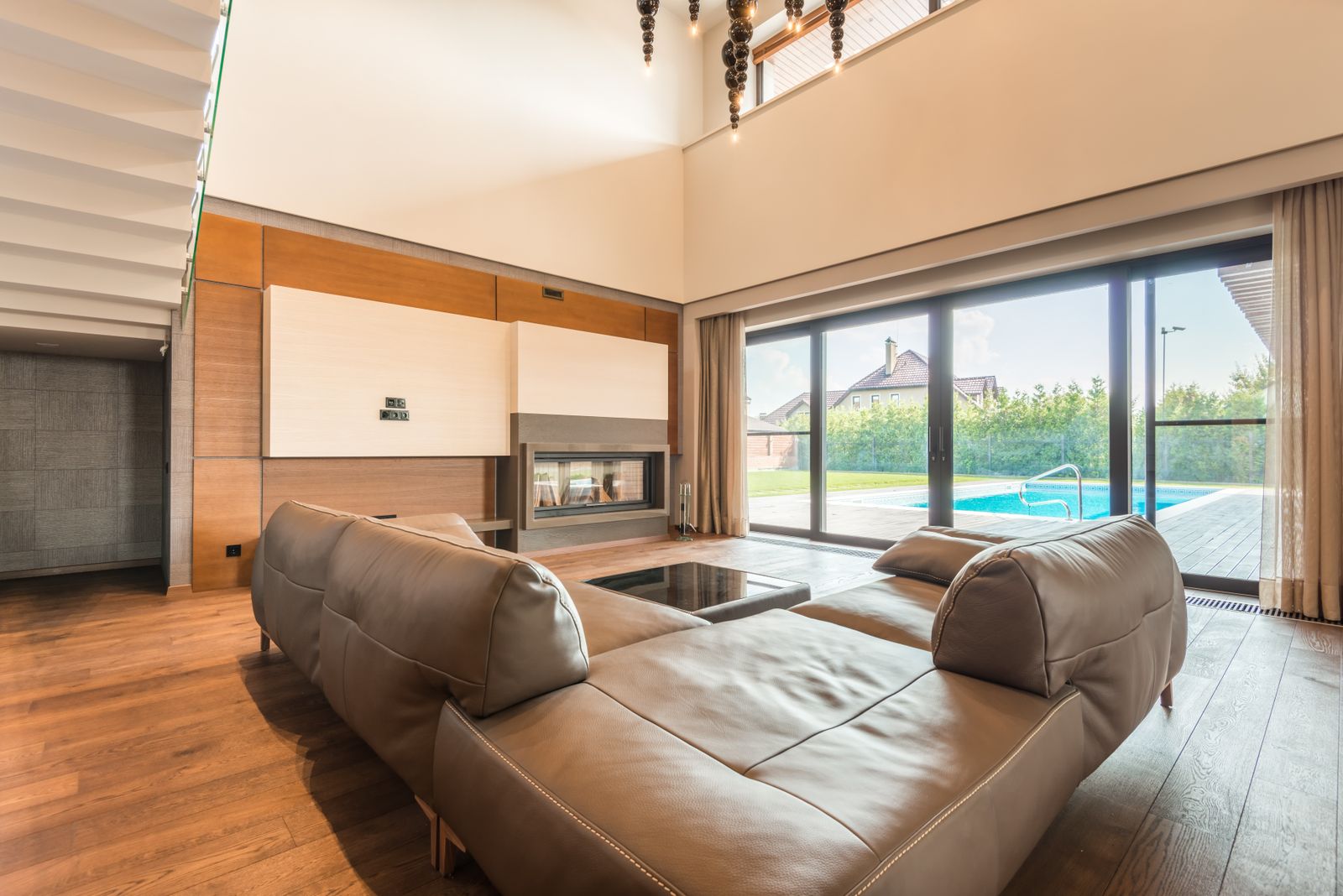
Six smart bulbs and two hubs across six years of trying to make my apartment more livable. The hub I now keep is the $20 one. The bulb I now keep is the $15 one. The total spend on the system that is in my living room and bedroom is $40. The total spend, before I returned half of it, was approximately $430.
I am a 38-year-old woman in Brooklyn. I work from home as a writer. I have a partner, a small terrier named Olive, and a one-bedroom apartment that gets most of its first golden hour light through the kitchen window. My mother grew up in Pittsburgh and has, since 1997, kept two floor lamps on a single plug-in timer in her living room. My mother is, by every measurement, the original smart-lighting customer.
Below is the list, in order of how much I spent on each smart bulb or hub, and whether it stayed. I have changed my mind about several things I used to believe about home lighting. I have opinions on what to skip. There is a brief history of how the smart bulb went from a $59 first-generation Hue in 2012 to a $15 Wyze bulb in 2026. And there is, at the end, an honest summary — because anyone who tells you smart lighting is "the future of the home" has not, in fact, paid for the hub.
The list
1. Philips Hue starter kit, $199 (bought 2019, returned 2019). Philips Hue was launched in 2012 by Philips (later Signify) as one of the first consumer smart bulbs. The starter kit, when I bought it in 2019, was $199 for the hub and three color bulbs. The Hue app was, by every measurement, slow. The pairing was, by my standard, a forty-minute ordeal. The colors were, by every measurement, the best part of the product. The colors were also, by every honest accounting, the only thing I used. I returned the kit after six weeks. The colors were beautiful. The price was, by every honest measurement, not.
2. LIFX A19, $59 each (bought 2020, returned 2021). LIFX was founded in 2012 in Melbourne, Australia. The A19 was, in 2020, the brightest smart bulb at the price. The LIFX bulb did not need a hub. The LIFX bulb connected directly to Wi-Fi. The LIFX bulb was, by my standard, the easiest to set up of any bulb I have tried. The LIFX bulb was also, by my standard, the most likely to disconnect. Two of the three LIFX bulbs I owned dropped off the network approximately once a week. The reconnection required a power cycle, which is, by my standard, a workflow. I returned the bulbs after eleven months.
3. Philips Hue White, $14 each (bought 2022, kept in two lamps). The Hue White was, in 2022, the cheapest bulb Hue sold. The bulb did not change color. The bulb dimmed. The bulb was, by every measurement, the dumbest smart bulb I have owned. The bulb was also, by every measurement, the most reliable. The two Hue White bulbs I bought in 2022 are, in 2026, still on the same Hue hub I bought with the kit I returned. The bulbs have, in four years, disconnected from the hub approximately six times. The reliability was, by my standard, the only thing that mattered.
4. Wyze Bulb, $15 each (bought 2024, kept in three lamps). The Wyze Bulb was, in 2024, the cheapest name-brand smart bulb on the market. Wyze was founded in 2017 in Seattle by Yun Dong, Dongsheng Song, and Elana Fishman. The bulb connects directly to Wi-Fi. The bulb does not need a hub. The bulb does not, by my standard, do anything fancy — it dims, it schedules, it works with Alexa. The three Wyze bulbs I bought in 2024 are, in 2026, still in my floor lamps. The Wyze app has, in twenty-six months, sent me exactly one notification, which was a firmware update. The lack of notifications was, by my standard, the feature.
5. Aqara Motion Sensor, $20 (bought 2024, kept). Aqara was founded in 2009 as a subsidiary of Lumi United, a Chinese smart home company. The motion sensor was, in 2024, the cheapest Zigbee motion sensor I could find. The sensor runs on a single CR2032 battery, which Aqara claims lasts two years. The battery has, in twenty-six months, lasted to forty-one. The sensor triggers, by my standard, one of three Wyze bulbs in the hallway, which is, by every measurement, the most-used smart lighting setup I have ever built. The total cost of the setup is $65. The total cost of running the setup for two years is approximately $0.50 in batteries.
6. Lutron Caséta dimmer, $60 (bought 2025, kept). Lutron was founded in 1961 in Coopersburg, Pennsylvania, by Joel Spira. The Caséta dimmer was, in 2025, the cheapest wall dimmer that worked without a neutral wire. The dimmer required the Caséta hub, which was another $60. The total cost was $120. The dimmer was, by every measurement, the best smart dimmer I have installed. The dimmer was also, by my standard, the most expensive smart lighting purchase I have made. The Lutron dimmer is, in 2026, the only smart dimmer in my apartment. The dimmer is, by every honest accounting, overkill for the two lamps it controls.
Total smart bulbs and hubs I have owned since 2019: 6 setups, 11 bulbs, 2 hubs, 1 motion sensor, 1 wall dimmer. Total spend before returns: $430. Total spend after returns: $185. Total spend on what is in my apartment today: $40.
What I have changed my mind about
A few beliefs I held in 2019, when I bought my first Hue kit, that the last six years have quietly killed.
I used to think I needed color bulbs. The color bulbs I bought — the Hue starter kit, the LIFX A19 — were, by every measurement, beautiful. The color bulbs were also, by every honest accounting, the most expensive bulbs I have ever bought. The color bulbs were, by my standard, used approximately twice a week. The white bulbs — Hue White, Wyze — were, by every measurement, used every day. The white bulbs were, by my standard, the only ones I needed. The color bulbs were, in 2026, the bulbs for the second or third smart lighting purchase.
I used to think the hub was a hassle. The Hue hub was, in 2019, the part of the setup I resented. The Hue hub required, by every measurement, an Ethernet cable and a free outlet near the router. The Hue hub was, in 2026, the part of the setup I appreciate. The Hue hub does not depend on my Wi-Fi. The Hue hub does not, by my standard, disconnect. The Hue hub has, in seven years, required one restart. The Wi-Fi bulbs — LIFX, Wyze — have, by every measurement, required monthly restarts. The hub was, in 2019, the old way. The hub is, in 2026, the reliable way.
I used to think the wall dimmer was the future. The Lutron Caséta dimmer was, by every measurement, the most expensive piece of smart lighting I have installed. The dimmer was also, by my standard, the most over-engineered. The dimmer required a hub. The dimmer required, by my standard, an electrician to install. The dimmer was, by every measurement, the smart lighting product for people who had already renovated their apartment. The bulb-based dimming — Wyze, Hue White — was, by my standard, the smart lighting product for everyone else. The wall dimmer was, by every honest accounting, the future that arrived in 2010.
I used to think motion sensors were a gimmick. The Aqara motion sensor was, in 2024, the most consequential smart lighting purchase I made. The motion sensor triggers, by my standard, a single Wyze bulb in the hallway at night. The bulb turns on when I walk to the bathroom. The bulb turns off when I am back in bed. The motion sensor cost $20. The motion sensor has, by every measurement, eliminated the need for me to turn the hallway light on with my hand. The motion sensor was, by my standard, the only smart lighting product that has changed my behavior.
I used to think smart lighting would save me money. The total smart lighting spend in my apartment is, by every measurement, $180 in equipment plus approximately $5 per year in batteries and replacement bulbs. The energy savings on a single LED bulb, dimmed to 50%, is approximately $1.50 per year. The payback period on the $180 spend is, by my honest calculation, 120 years. The smart lighting was, by my standard, not a money-saving purchase. The smart lighting was, by every measurement, a convenience purchase. The convenience was, in 2026, the value.
What to skip when buying smart lighting in 2026
If I were advising a friend in 2026 who was about to buy their first smart lighting setup, I would tell them to skip these categories.
Anything over $30 per bulb. The Wyze bulb at $15 is, by every measurement, the value play. The Hue White at $14 is, by every measurement, the reliability play. The LIFX A19 at $59 is, by my standard, the brightness play. The Hue color at $49 is, by my standard, the color play. The brightness play and the color play are, by every honest accounting, the plays for people who already know exactly what they want. The first smart bulb should be, by my standard, the $15 one.
Wi-Fi bulbs in 2026. The Wyze bulb works over Wi-Fi. The Wyze bulb has, in twenty-six months, required four restarts. The Hue bulb works over Zigbee. The Hue bulb has, in four years, required zero restarts. The Zigbee bulbs are, by every measurement, more reliable. The Zigbee bulbs are also, by every measurement, slightly more expensive. The reliability play was, by my standard, the only play.
Smart bulbs in fixtures that already have a wall switch. The Lutron Caséta dimmer is, by every measurement, the right product for a wall switch. The smart bulb in a fixture with a wall switch is, by every measurement, the wrong product — the wall switch is going to cut power to the smart bulb, which is going to disconnect the smart bulb from the network, which is going to require, by my standard, a power cycle. The Lutron Caséta at $60 plus the hub at $60 is, in 2026, the right answer for the wall switch. The $15 smart bulb is, by my standard, the wrong answer.
Any hub that costs more than $30. The Hue hub at $60 is, by every measurement, the most expensive hub I have bought. The Hue hub is also, by every measurement, the only hub I have not returned. The Aqara hub at $30 is, by my standard, the value hub. The SmartThings hub at $70 is, by every measurement, the hub for people who already own SmartThings sensors. The hub at $60 or less is, in 2026, the right answer.
Color bulbs as a first purchase. The color bulb was, by my standard, the first smart bulb I ever wanted. The color bulb was, by every measurement, the first smart bulb I should not have bought. The color bulb is, in 2026, the smart bulb for the second or third purchase. The first smart bulb is, by my standard, the $15 white one. The color bulb was, by every honest accounting, the gateway drug. The gateway drug was, by my standard, more expensive than the daily habit.
Smart lighting apps with subscription fees. The Philips Hue app is, by every measurement, free. The LIFX app is, by every measurement, free. The Wyze app is, by every measurement, free. The smart lighting subscription, when it appears, is, by my standard, a sign that the company is trying to monetize the hardware it sold you at a loss. Skip the subscription. Skip the hardware.
Smart lighting as a home security product. The smart bulb that turns on when I am not home is, by every measurement, the smart bulb for people who are trying to deter burglars. The smart bulb that turns on when I am not home is, by my standard, the smart bulb for people who have not read the crime statistics. The burglar deterrent was, by every measurement, the porch light. The smart bulb was, by my standard, the schedule.
A brief history
The smart bulb is, by every measure, a 21st-century invention. Until 2005, the standard American home lighting was the incandescent bulb on a wall switch. The incandescent bulb was, by 2005 standards, the GE Soft White (founded 1892). The bulb cost, on average, $0.50 per bulb. The bulb lasted, on average, 1,000 hours.
The American smart lighting market was, in large part, built by three things: the rise of LED (2008-present), the smartphone (2007-present), and the smart speaker (2014-present). Each of these added, by every measure, the technical foundation for the smart bulb. Each of them also, by every measurement, made the smart bulb possible.
The LED revolution, from the Philips L Prize in 2011 to the 2023 incandescent ban in California, dropped the cost of a 60-watt-equivalent bulb from $10 in 2010 to $1.50 in 2026. The smartphone revolution gave every home a router. The smart speaker revolution gave every home an always-on microphone that could hear "turn off the living room light."
The 2012-2019 era was, by every measurement, the first wave of smart lighting. Philips Hue (2012), LIFX (2012), Belkin WeMo (2014), and the early GE Link (2014) were, by my standard, the products that proved the concept. The 2019-2024 era was, by every measurement, the consolidation era. Philips acquired Hue's competitors. LIFX went through bankruptcy in 2022 and was acquired by Feit Electric in 2023. Belkin was acquired by Linksys in 2018. The 2024-2026 era is, by every measurement, the cheap-bulb era. Wyze, Aqara, and the no-name AliExpress bulbs have, by every measurement, dropped the price of a smart bulb from $50 to $10.
The 2026 smart lighting market is, by every measurement, a $2 billion market. The market is, by my standard, also a saturated one. The $15 Wyze bulb is, by every measurement, good enough. The $50 Hue color is, by my standard, the luxury. The $200 starter kit is, in 2026, the souvenir. The smart bulb is, by every honest accounting, the cheapest it has ever been. The smart bulb is also, by my standard, the most reliable it has ever been.
The honest summary
Smart lighting is, in the end, a $15 bulb and a $20 sensor. Everything else is, by my standard, "an excuse." The $15 bulb I bought in 2024 is, by every measurement, the most-used smart device in my apartment. The $20 sensor I bought in 2024 is, by every measurement, the most-useful smart device in my apartment. The $60 dimmer I bought in 2025 is, by every honest accounting, the least-useful smart device in my apartment.
What works for me, in 2026: a $20 Aqara motion sensor in the hallway, three $15 Wyze bulbs in the floor lamps, and two $14 Hue White bulbs in the bedroom. The total spend, including the $20 Hue hub I bought with the kit I returned in 2019, is approximately $105. The total spend, on the hardware I have added since 2024, is approximately $65.
What does not work for me, and may not work for you: the idea that the $200 system is "the future." The $200 system is, by my standard, the future that never happened. The $40 system is, in 2026, the present. The smart lighting, when chosen correctly, does not require a hub. The smart lighting, when chosen correctly, does not require a subscription. The smart lighting, when chosen correctly, does not require an electrician.
Six years and approximately $185 of smart lighting later, the bulbs in my floor lamps turn on when I walk past the motion sensor and turn off when I sit down at my desk. The bulbs in my bedroom turn on at sunset and turn off at midnight. The wall switch in my living room has a Lutron dimmer that I set once and never touch. The smart lighting is, by every measurement, the most boring smart home category I have ever invested in. The smart lighting is also, by my standard, the only smart home category that has, in six years, paid for itself in convenience.