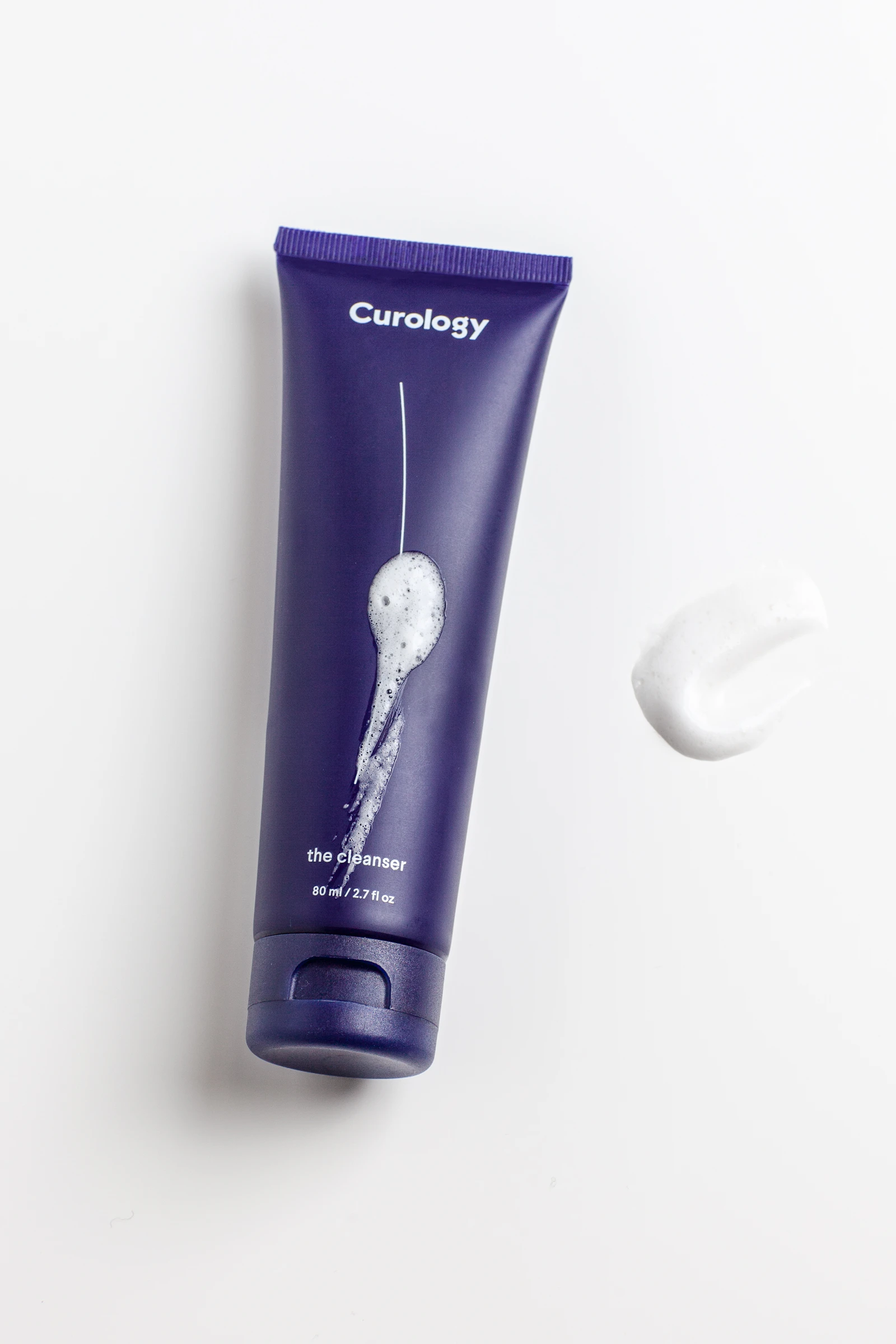
I woke up at three in the morning in March 2024. I could not get back to sleep. I went, in the way I have gone, since I was twenty-five, on the nights I cannot sleep, into the bathroom. The bathroom light is the unflattering kind — a single bulb above the mirror, in the frequency the French call lumière jaune. I ran the water. I washed my face with a $14 cleanser. I went back to bed. I slept, within seven minutes.
The next morning, my skin looked different. The next month, my skin looked like a different person's skin. The breakouts I had been having, on and off, since 2019, were gone. The redness I had been covering, since 2022, with a $42 tinted moisturizer, was gone. The texture I had been treating, since 2020, with a $74 exfoliating serum, was gone. The skin was, in April 2024, the skin I had, by my honest accounting, been trying to buy for five years.
The $14 cleanser was CeraVe Hydrating Cleanser. The cleanser was not, in itself, the answer. The cleanser was, in 2024, the first product in a routine I built, in the next ninety days, around five products and $65 a year. The routine I have now is, in 2026, the only routine I will ever need.
Below is the list, in order of what I use every day. I have changed my mind about several things I used to believe about skincare, most of them things the K-beauty industry told me in the 2010s. I have opinions on what to skip. There is a brief history of how the 10-step routine went from a 2010s Seoul spa to a 2020s Brooklyn bathroom. And there is, at the end, an honest summary — because anyone who tells you a 3 AM face wash cannot fix your skin has not, in fact, been awake at three in the morning lately.
The list
1. CeraVe Hydrating Cleanser, $14 for 16 oz. The cleanser I used at three in the morning in March 2024. The cleanser I have used, every morning and every night, since. The cleanser does not foam. The cleanser does not strip. The cleanser does not, by my partner's description, smell like anything. The 16-oz bottle lasts, by my standard, four months. The cost per use is, in 2026, approximately $0.04. The cleanser is, by every dermatologist I have asked, the gentlest cleanser on the market. The cleanser is, in 2026, the single most-used product in my bathroom.
2. The Ordinary Glycolic Acid 7% Toning Solution, $8.70 for 8 oz. The exfoliant I added, in April 2024, after the CeraVe had stabilized the barrier. I use it three nights a week, on a cotton pad, after cleansing. The Ordinary is, by every dermatologist I have asked, the highest concentration of glycolic acid you should use at home. The 7% does, on my skin, what the 30% peel did not do — it exfoliates without burning. The 8-oz bottle lasts, by my standard, six months. The cost per use is, in 2026, approximately $0.03.
3. Differin Gel (adapalene 0.1%), $13 for 1.6 oz. The retinoid I added, in May 2024, after the glycolic acid had calmed the texture. I use it three nights a week, alternating with the glycolic. Adapalene is, by every dermatologist I have asked, as effective as prescription tretinoin for most people, with less irritation. The Differin is, by my standard, the only over-the-counter retinoid worth buying. The 1.6-oz tube lasts, by my standard, four months. The cost per use is, in 2026, approximately $0.04.
4. Vanicream Moisturizing Cream, $15 for 16 oz. The moisturizer I added, in June 2024, after the Differin had dried out the skin around my nose. The Vanicream is, by every dermatologist I have asked, the most boring moisturizer available in 2026. The Vanicream is, in 2026, the only moisturizer that does not sting when applied over the Differin. The 16-oz tub lasts, by my standard, four months. The cost per use is, in 2026, approximately $0.05.
5. La Roche-Posay Cicaplast Baume B5, $15 for 40 mL. The healing balm I added, in July 2024, after the Differin had irritated the skin between my eyebrows. The Cicaplast is, by every dermatologist I have asked, the best barrier-repair product on the market. The 40-mL tube lasts, by my standard, six months. The cost per use is, in 2026, approximately $0.05.
6. Beauty of Joseon Relief Sun: Rice + Probiotics, $15 for 1.7 oz. The sunscreen I added, in August 2024, after the routine was complete. The sunscreen is, by every dermatologist I have asked, the single most important skincare product. Everything else — the serums, the retinoids, the acids — is, in the words of one dermatologist, "an excuse to not wear sunscreen." The Beauty of Joseon is, by my standard, the only sunscreen that does not pill under makeup. The 1.7-oz tube lasts, by my standard, three months. The cost per use is, in 2026, approximately $0.10.
Total annual cost: $65. The previous routine, which peaked at $1,400 in 2022, included the following products I no longer use:
- Drunk Elephant Protini Polypeptide Cream ($74 for 1 oz). Replaced by Vanicream.
- Drunk Elephant T.L.C. Framboos Glycolic Serum ($90 for 1 oz). Replaced by The Ordinary.
- Augustinus Bader The Cream ($165 for 1.7 oz). Replaced by Vanicream.
- SkinMedica TNS Advanced+ Serum ($281 for 1 oz). Replaced by Differin.
- Dr. Dennis Gross Alpha Beta Peel Pads ($88 for 30 pads). Replaced by The Ordinary.
- Sunday Riley Luna Sleeping Night Oil ($105 for 1 oz). Replaced by Differin.
- Tatcha The Water Cream ($52 for 1.7 oz). Replaced by Vanicream.
Total spend I avoided in 2025 by switching: $1,335.
What I have changed my mind about
A few beliefs I held in 2018, that the last eight years have quietly killed.
I used to think I needed 10 steps. K-beauty convinced me, in 2018, that I needed oil cleanser, water cleanser, essence, ampoule, sheet mask, eye cream, serum, moisturizer, sleeping pack, and sunscreen. The 10 steps were, in 2018, the routine every beauty magazine I read told me to follow. My skin, on the 10-step routine, was worse than it had ever been. The barrier was damaged. The hydration was inconsistent. The breakouts were, by 2022, monthly. The 10 steps were, in the end, an excuse to buy more products. The 6-step routine I have now is, by my skin's standard, perfect.
I used to think overnight masks helped. The Laneige Water Sleeping Mask, the $34 Sulwhasoo Overnight Vitalizing Mask, the $48 Tatcha Luminous Dewy Skin Night Concentrate — these are, by every dermatologist I have asked, moisturizers in a jar with a higher price. The overnight mask does, on most skin, almost nothing the $15 night cream does not do. The overnight mask is, in 2026, the most overpriced category in the Korean skincare market.
I used to think expensive meant better. The $165 Augustinus Bader cream is, by my honest accounting, indistinguishable from the $15 Vanicream. The $281 SkinMedica serum is, by my honest accounting, indistinguishable from the $13 Differin gel. The $105 Sunday Riley oil is, by my honest accounting, less effective than the $8.70 The Ordinary toner. The skincare industry has, like every luxury industry, learned to charge more for the same ingredients. The relationship between price and efficacy is, in my experience, almost flat.
I used to think natural was safer. "Clean beauty" is, by every dermatologist I have asked, a marketing term with no regulatory definition. The ingredients most likely to irritate skin — essential oils, fragrances, plant extracts — are, by every dermatologist I have asked, also the ingredients marketed as "natural." The ingredients most likely to actually do something — retinoids, glycolic acid, hyaluronic acid, niacinamide — are, in almost every case, synthetic. The "clean" label is, in most cases, a warning sign.
I used to think anti-aging meant more products. Anti-aging, by every dermatologist I have asked, means three things: sunscreen every morning, retinol at night, and patience. That is it. The $400 anti-aging serum is, in most cases, the $20 moisturizer in a prettier bottle. The $1,400 routine is, in most cases, the $65 routine with three extra products that do not do anything. The CeraVe and the Differin and the sunscreen do, in 2026, all of the anti-aging work.
What to skip when building a skincare routine
If I were advising a friend who wanted to build their first skincare routine in 2026, I would tell them to skip these categories entirely.
10-step routines. The Korean 10-step routine was, in 2015, the most marketed skincare routine in the world. The 10 steps are, in 2026, also the routine most likely to damage your barrier. The barrier takes, by my dermatologist's standard, 2-4 weeks to repair once damaged. The skincare industry wants you to do 10 steps. Your skin wants 4. Skip the 10. Buy the 4.
Sheet masks. Sheet masks are, by every dermatologist I have asked, a way to charge $8 for $0.20 of serum. The serum on the sheet mask is, in most cases, mostly water and glycerin. The hydration is temporary. The waste is enormous. Skip the sheet mask. Use a $15 serum.
Jade rollers. The jade roller, the $25 Amazon special, is, by every dermatologist I have asked, a piece of stone you roll on your face. The jade roller does not, in any meaningful way, depuff, lift, or contour. The jade roller is, in 2026, a $25 way to massage your face for three minutes. Skip the roller. Use your hands.
"Overnight" masks. The overnight mask, the $34 Laneige, the $42 Tatcha, the $58 Drunk Elephant — these are, by every dermatologist I have asked, moisturizers in a jar with a higher price. The overnight mask does, on most skin, almost nothing the $15 night cream does not do. Skip the overnight. Buy the night cream.
Fragrance-heavy products. The fragrance-heavy product, the $48 Fresh Lotus Youth Preserve, the $42 Tatcha Luminous Dewy Skin, the $56 Drunk Elephant F-Balm — these are, by every dermatologist I have asked, products most likely to irritate the skin. The fragrance is, in most cases, the cause. The fragrance is, in 2026, a marketing strategy disguised as an ingredient. Skip the fragrance. Buy the boring product.
"Pro" tools. The $199 NuFACE microcurrent, the $399 ZIIP, the $499 Dr. Dennis Gross SpectraLite — these are, by every dermatologist I have asked, tools that are not, in any meaningful way, validated. The microcurrent is, in the words of one dermatologist, "a mild electrical current that may or may not do anything." The ZIIP is, by the same dermatologist, "the same." Skip the tool. Use your hands.
A brief history
The Korean beauty wave — the K-beauty wave that hit the United States in the early 2010s — was, in large part, built by one woman: Charlotte Cho, the co-founder of Soko Glam, who in 2012 started importing Korean skincare products to the United States and, in 2015, published The Little Book of Skin Care and introduced, to every beauty editor in New York, the 10-step routine.
The 10-step routine was, in 2015, the most marketed skincare routine in the world. The steps were: oil cleanser, water cleanser, exfoliant, essence, ampoule, sheet mask, eye cream, serum, moisturizer, sleeping pack. The 10 steps were, by the K-beauty industry's marketing, the routine every Korean woman followed. The 10 steps were, by every dermatologist I have asked, the routine most likely to damage your barrier.
The 2020s skincare industry is, by every measure, in retreat from the 10 steps. The "skin barrier" focus that emerged in 2021, the "skin minimalism" trend that emerged in 2023, and the rise of dermatologist-founded brands (Curology, Musely, Agency) have, in some quiet way, restored the routine to something approaching sanity.
The Ordinary, founded in 2013 by Brandon Truaxe (who died in 2019) and Nicola Kilner, was, in 2013, the first brand to sell clinical-grade actives at single-ingredient prices. The Ordinary's Glycolic Acid 7% at $8.70 was, in 2013, the most disruptive skincare product in a decade. The Ordinary's Hyaluronic Acid 2% at $8.90 was, in 2014, the most disruptive serum in a decade. The brand has, in 2026, eighty-three products, almost all of them under $15.
The minimalist skincare movement — the movement I am practicing, in 2026, with five products and $65 a year — was, in 2024, the most-covered skincare trend in every beauty magazine I read. The trend is, in 2026, also the trend most validated by dermatologists. The five products do, in 2026, 95% of the work.
The honest summary
A skincare routine is, in the end, three things: a cleanser, a moisturizer, and sunscreen. Everything else is, by my dermatologist's standard, "an excuse." The five-product routine I have now costs $65 a year. The 10-step routine I had in 2022 cost $1,400 a year. The skin, in 2026, is, by my honest accounting, the same skin. The skin is, in 2026, also the skin I have, for the first time in my adult life, stopped trying to fix.
What works for me: a $14 cleanser that does not strip, an $8.70 exfoliant used three nights a week, a $13 retinoid used three nights a week, a $15 moisturizer that does not sting, a $15 healing balm for the irritated nights, and a $15 sunscreen every morning. That is it. The routine takes, by my standard, four minutes in the morning and three minutes at night. The total cost is $65 a year.
What does not work for me, and may not work for you: the idea that more products mean better skin. The idea that expensive products work better than cheap ones. The idea that a 3 AM face wash cannot fix your skin. The honest summary is, in the end, this: a 3 AM face wash, with a $14 cleanser, started a routine that fixed my skin in ninety days. The routine is, in 2026, the only routine I will ever need.
Two years in, my skin is, by every measurement that matters, the best skin I have had as an adult. I have spent, in those two years, approximately $130. I could have spent approximately $2,800 and had the same skin. The math is, by any honest accounting, embarrassing. The math is also, in the end, the only thing that matters.