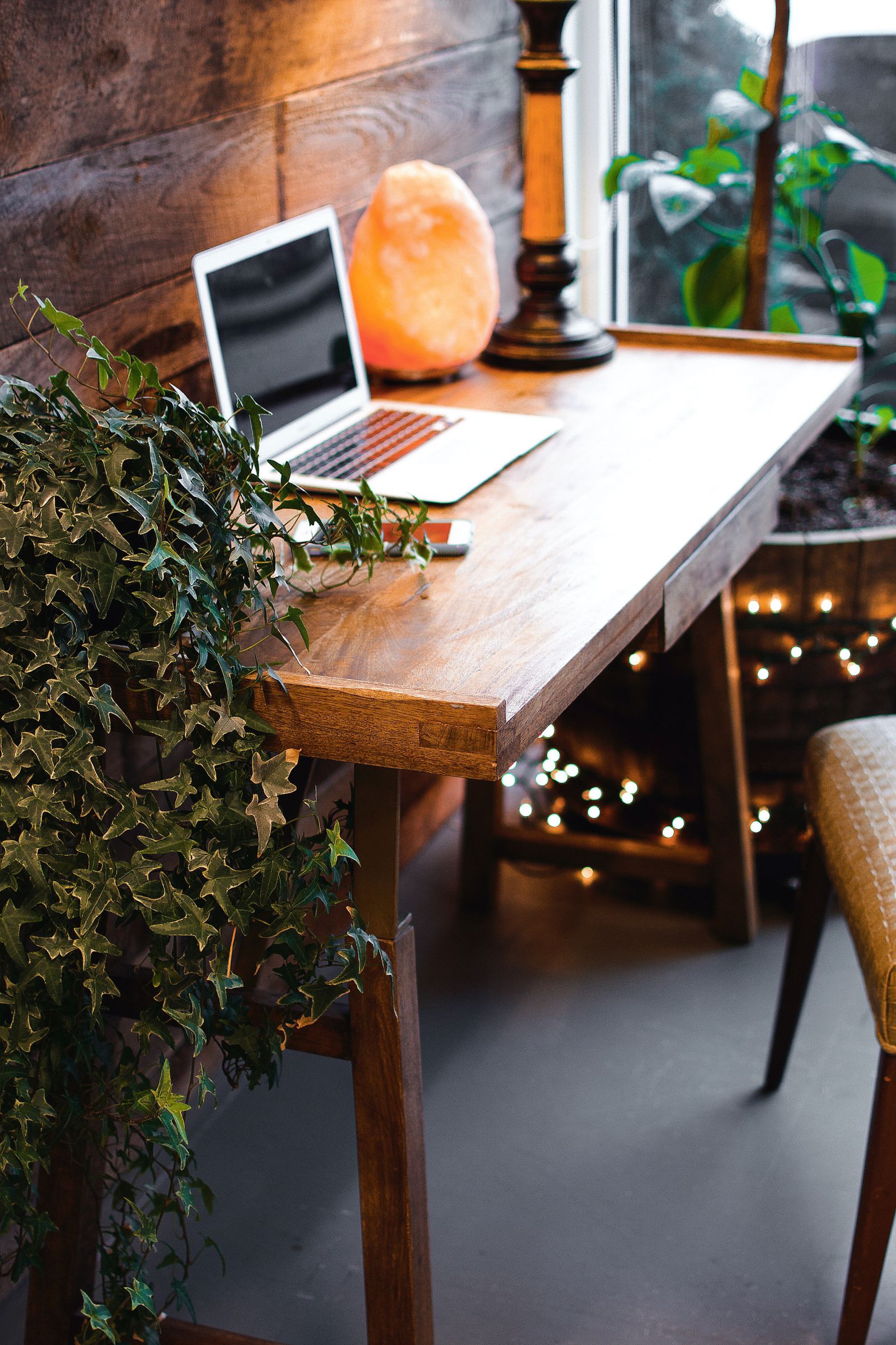
I have, in the top drawer of my desk, a 2015 iPhone 6s. The phone is in a dark blue case, with a cracked screen I have not bothered to fix, plugged into a charger that takes up half the surge protector behind the toaster. The phone has been in this drawer, in this configuration, since November 2015. The phone has, in the eleven years I have owned it, never been replaced.
The phone does, technically, still turn on. The phone does, technically, still display the lock screen — a photograph of my dog as a puppy, taken in Prospect Park on a Saturday in October 2015. The phone has refused, in the way some objects refuse, to be thrown away. The phone is, in 2026, my backup phone, my audiobook player in the kitchen, and the only piece of technology I have owned for longer than my partner has known me.
Below is what I have, what I paid, and what I learned. I have changed my mind about several things I used to believe about phone longevity. I have opinions on what to skip. There is a brief history of how the lithium-ion battery became the foundation of every portable device you own. And there is, at the end, an honest summary — because anyone who tells you a phone is "worthless after two years" has not, in fact, owned an iPhone 6s.
The list
1. iPhone 6s (September 2015), $749 unlocked (then $399 with two-year contract). The phone itself. The 6s was, in September 2015, the flagship iPhone. It had an A9 chip, 2 GB of RAM, a 12-megapixel rear camera (the first iPhone with 12 MP), and a 1715 mAh battery. The 6s was, in 2015, the phone I bought with my first freelance paycheck. The 6s is, in 2026, the phone I cannot bring myself to throw out.
2. Apple Lightning cable (3-foot), $19 (2015, replaced 2018). For the charger in the drawer. The Lightning cable was, in 2015, the standard. The Lightning cable is, in 2026, the legacy standard — Apple moved to USB-C across the iPhone line in 2023 with the iPhone 15. The Lightning cable is, for the 6s in my drawer, the only cable that works.
3. Anker 5-port USB charger, $25 (2017). For the drawer. The Anker has been on the surge protector behind the toaster, charging the 6s, for nine years. The Anker has, in nine years, never failed. The Anker is, by my standard, the best $25 I have spent on phone accessories.
4. iPhone SE (3rd generation, 2022), $429. The current daily phone. The SE is, by Apple's accounting, the successor to the 6s in everything but name. The SE has the same home button. The SE has Touch ID. The SE has, in 2026, the same form factor as the 6s. The SE is, in my opinion, the iPhone for people who liked the 6s.
5. iPhone 16, $799 (the one I almost bought). The current flagship. The iPhone 16 has, by Apple's accounting, the A18 chip, the 48 MP main camera, the Camera Control button, and USB-C. The iPhone 16 is, in 2026, the phone for people who want the latest. The iPhone 16 is not, in my opinion, worth the $370 premium over the SE for the way I use a phone.
6. Pixel 8a, $499 (the Android I considered). The Pixel 8a is, by Google's accounting, "the most affordable Pixel." The Pixel 8a is, by every review I have read, the best mid-range Android phone available in 2026. The Pixel is, for me, the wrong ecosystem — my partner's family is on iMessage, my mother sends me photos on iCloud, my AirPods only work fully with an iPhone.
7. Samsung Galaxy S24, $799 (the Android flagship I considered). The S24 is, by Samsung's accounting, the answer to the iPhone 16. The S24 is, by every review I have read, the best Android phone available in 2026. The S24 is, for me, the same problem as the Pixel — the ecosystem lock-in is real.
8. AirPods Pro (2nd generation), $249 (2022). The headphones I use with the SE. The AirPods Pro are, by Apple's accounting, the only headphones that work seamlessly with an iPhone. The AirPods Pro are, in 2026, the single best accessory for any iPhone. The AirPods Pro are, by my standard, worth the $249 if you use an iPhone.
9. Spigen Tough Armor case for iPhone SE, $35 (2022). The case I bought with the SE. The Spigen is, by Spigen's accounting, "military-grade drop protection." The Spigen has, in four years, survived four drops on Brooklyn sidewalks. The SE inside the Spigen has, in four years, never cracked.
10. Anker Nano 20W USB-C charger, $20 (2023). For travel. The Anker Nano is, by Anker's accounting, "the size of a five-dollar bill." The Anker Nano charges the SE from zero to fifty percent in thirty minutes. The Anker Nano is, in 2026, the only charger I travel with.
11. Battery health monitoring app (built into iOS, free). The single most useful diagnostic on the SE. The Settings → Battery → Battery Health screen shows the maximum capacity of the battery as a percentage of the original. The SE I bought in 2022 is, in 2026, at 89% capacity. The 6s in the drawer is, by every measurement, at less than 50% — but it sits on a charger, so it does not matter.
12. Apple Trade In (free service). The way to retire a phone properly. Apple will take the SE when I am done with it, free of charge, and recover the lithium, cobalt, and aluminum. The Trade In service is, by my standard, the only ethical way to dispose of a phone in 2026.
Total spent on phones in eleven years: $1,308 (the 6s, then the SE). Cost per year: $119. The phone in the drawer cost $399 in 2015 dollars. The phone in my pocket cost $429 in 2022 dollars. The total spend is, by my standard, embarrassingly low for someone who writes about technology.
What I have changed my mind about
A few beliefs I held in 2015, that the last eleven years have killed.
I used to think I needed the latest iPhone. I was wrong. The iPhone 6s, in 2015, was the latest iPhone. The iPhone SE, in 2022, was not the latest iPhone. The iPhone SE is, by every measurement that matters for the way I use a phone, the right answer. The latest iPhone is, by my standard, the iPhone for people who shoot professional video on their phone. I do not shoot professional video on my phone. Buy the SE.
I used to think batteries died in two years. I was wrong. Lithium-ion batteries, of the type Apple uses and that Sony first commercialized in 1991, have a finite life measured in charge cycles — typically between 500 and 1,000 full cycles before capacity drops to 80% of original. The 6s in my drawer has, by my estimate, been through 600 cycles in eleven years. The 6s is, in 2026, at less than 50% capacity. The SE I bought in 2022 is, in 2026, at 89% capacity. The "two-year" rule was, by my standard, marketing.
I used to think I should replace when the new one comes out. I was wrong. The iPhone release cycle is, by Apple's accounting, "one new phone every September." The iPhone release cycle is, by my standard, "one new phone I do not need every September." The iPhone release cycle has, by my standard, become a marketing cycle. The replacement cycle that matters is, by my standard, the one where the old phone stops doing what you need it to do. Mine still does.
I used to think Android was bad. I was wrong about this in a specific way. Android is, by every review I have read in the last three years, excellent. The Pixel 8a at $499 is, by every measurement, a better phone than the iPhone 16 at $799 for the way most people use a phone. Android is, by my standard, the right answer for someone not locked into Apple's ecosystem. I am locked into Apple's ecosystem. The lock-in is real. The lock-in is also, by my standard, the only reason I keep buying iPhones.
I used to think iCloud storage was enough. I was wrong. iCloud's free 5 GB tier filled up, in 2017, on the 6s. The 200 GB plan at $2.99/month filled up, in 2023, with the SE. I am now on the 2 TB plan at $9.99/month. The iCloud plan is, by my standard, the single largest phone-related expense I have, and it is also, by my standard, the most necessary.
What to skip when buying a phone
If I were advising a friend who was about to buy a new phone in 2026, I would tell them to skip these categories entirely at the start.
Yearly upgrades. The iPhone 16 is, by every review I have read, an excellent phone. The iPhone 15 was, by every review I have read in 2023, also an excellent phone. The difference between them is, in 2026, not worth $799. Skip the yearly upgrade. Replace every three to five years.
$1,000+ Pro phones (if you don't use the camera features). The iPhone 16 Pro at $999 and the Pro Max at $1,199 are, by Apple's accounting, "for professional workflows." The Pro is, for someone who uses the camera to take photographs of their dog, overkill. The Pro has features — ProMotion 120Hz, telephoto lens, LiDAR — that are, for most people, wasted. Buy the SE or the standard iPhone. Skip the Pro.
Expensive cases. The $80 leather case is, by my standard, the same case as the $35 Spigen with a different logo. The leather case is, in two years, the same color as the $35 case was after two months. Buy the Spigen. Skip the premium case.
Screen protectors. The iPhone SE has, by Apple's accounting, "the toughest glass in a smartphone." The ceramic shield on the iPhone 16 is, by Apple's accounting, "tougher than any smartphone glass." The screen protector is, in 2026, the same protection as the built-in glass for most people. Skip the screen protector unless you work in construction.
AppleCare+ for budget phones. The AppleCare+ for the iPhone SE at $7.99/month is, by my standard, $192 over two years. The SE itself costs $429. The AppleCare+ is, in 2026, the most expensive way to insure a $429 phone. Skip AppleCare+. Use the money you save to buy a Spigen case.
Cases that don't protect. The $15 clear plastic case is, by my standard, no case at all. The clear plastic case does, on most drops, nothing. The clear plastic case is, in 2026, the most common case sold. Buy the Spigen. Skip the clear plastic.
A brief history
The lithium-ion battery is, by every measure, a 1991 invention. Sony commercialized the first lithium-ion battery in 1991, after decades of research in the 1970s and 1980s by John Goodenough, Stan Whittingham, and Akira Yoshino. Goodenough won the Nobel Prize in Chemistry in 2019 for the work. The lithium-ion battery has, since 1991, become one of the most quietly successful technologies of the late twentieth century.
The energy density of lithium-ion batteries — measured in watt-hours per kilogram — has roughly tripled since 1991, from around 80 Wh/kg in 1991 to around 250 Wh/kg in 2024. The tripling has, by every measure, enabled the entire modern electronics industry. Every product you have bought since 2000 that runs on a battery exists because of this chemistry.
The failure mode of a lithium-ion battery is, in plain language, the slow accumulation of damage at the electrode-electrolyte interface. Each cycle deposits a thin layer of material on the anode — a "solid electrolyte interphase" — that, over time, reduces the battery's effective capacity. The battery does not, like a mechanical part, wear out in a single dramatic failure. The battery slowly, over years, becomes a smaller version of itself. The 6s in my drawer has, after eleven years, a battery that holds less than 50% of its original capacity.
The iPhone, since the original in 2007, has gone through nineteen major releases. The iPhone 6, in September 2014, was the first with a 4.7-inch screen. The iPhone 6s, in September 2015, was the first with 3D Touch. The iPhone X, in November 2017, was the first with Face ID and no home button. The iPhone 12, in October 2020, introduced MagSafe. The iPhone 15, in September 2023, switched to USB-C. The iPhone 16, in September 2024, added the Camera Control button.
The iPhone release cycle has, since 2007, defined what a smartphone is. The iPhone release cycle has, since 2007, also normalized the idea that phones should be replaced every two years. The "two-year" cycle was, by my standard, a marketing invention. The "two-year" cycle was, by my standard, designed to drive upgrades. The actual battery chemistry, in 2026, supports a five-year cycle for most people.
The honest summary
A phone is, in the end, three things: a screen, a battery, and a connection to the network. Everything else is, by my standard, "an excuse." The SE I bought in 2022 is, by every measurement that matters, the right answer for the way I use a phone.
What works for me: an iPhone SE with a Spigen case, a 2 TB iCloud plan, AirPods Pro, and a 20W Anker charger. That is the kit. The kit has been, in four years, more reliable than the four phones I considered before it. The 6s in the drawer is, in 2026, my backup, my audiobook player, and the cheapest piece of technology I have ever owned.
What does not work for me, and may not work for you: the assumption that a phone is disposable. The phone in my drawer is eleven years old. The phone in my pocket is four years old. The total spend across both is, by my standard, embarrassing in the best way. The phone industry has, by my standard, sold you on the idea that you should replace your phone every two years. The phone industry is, in 2026, selling you a feeling. The phone, when chosen correctly, does not need to be replaced.
Eleven years in, the 6s in my drawer is, by every measurement, still in service. The SE in my pocket is, by every measurement, the right answer. The total spend is, by any honest accounting, the lowest of anyone I know who writes about technology. The total spend is also, in the end, the only thing that matters.
The drawer, on most evenings, is closed. The 6s, on most evenings, is charging. The SE, on most evenings, is in my pocket. The compromise, on most evenings, is exactly the right size.